Overview
This project serves as a comprehensive reference for fundamental and advanced data structures and algorithms. It includes implementations in both C and C++, with detailed documentation, complexity analysis, and practical examples for each data structure and algorithm.
The repository is actively maintained and updated with new implementations, making it a valuable resource for learning, reference, and demonstrating strong programming fundamentals.
Problem Statement
Many developers struggle with implementing efficient data structures and algorithms. The challenges include:
- Understanding the theoretical concepts and practical implementations
- Implementing efficient algorithms with optimal time and space complexity
- Choosing the right data structure for specific problem domains
- Debugging and optimizing complex algorithmic solutions
- Providing clear, well-documented code examples
Solution
Data Structures
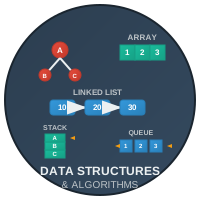
Implemented fundamental data structures including arrays, linked lists, stacks, queues, trees, and graphs with both iterative and recursive approaches.
Algorithms
Developed sorting, searching, graph traversal, and dynamic programming algorithms with detailed complexity analysis.
Documentation
Provided comprehensive documentation including usage examples, complexity analysis, and implementation notes.
Technical Implementation
Data Structures Implemented
- Linear Structures: Arrays, Linked Lists (Singly, Doubly, Circular), Stacks, Queues
- Tree Structures: Binary Trees, Binary Search Trees, AVL Trees, Heaps
- Graph Structures: Adjacency Matrix, Adjacency List representations
- Hash Tables: Open addressing and chaining implementations
Algorithms Implemented
- Sorting: Bubble Sort, Selection Sort, Insertion Sort, Merge Sort, Quick Sort, Heap Sort
- Searching: Linear Search, Binary Search, Depth-First Search, Breadth-First Search
- Graph Algorithms: Dijkstra's, Bellman-Ford, Floyd-Warshall, Topological Sort
- Dynamic Programming: Fibonacci, Longest Common Subsequence, Knapsack Problem
Code Quality Features
- Modular Design: Separate files for each data structure/algorithm
- Error Handling: Comprehensive input validation and error checking
- Memory Management: Proper allocation and deallocation in C implementations
- Testing: Unit tests and example programs for each implementation
Results & Impact
This project has become a valuable resource for learning and reference, demonstrating strong programming fundamentals and algorithmic thinking. Key achievements include:
- Comprehensive coverage of fundamental data structures and algorithms
- Clear, well-documented implementations in both C and C++
- Detailed complexity analysis for each algorithm
- Practical examples and use cases for each data structure
- Active maintenance and continuous improvements
- Used as reference material for programming interviews and coursework
The project showcases strong software engineering practices, including code organization, documentation, and testing methodologies.
Lessons Learned
- Algorithm Design: Understanding trade-offs between time and space complexity
- Code Organization: Importance of modular design and clear separation of concerns
- Documentation: Clear documentation is essential for maintainable code
- Testing: Comprehensive testing helps ensure correctness and reliability
- Performance Optimization: Profiling and optimization techniques for algorithmic efficiency
- Language Differences: Understanding C vs C++ implementation approaches